


Understanding Moral Distress and Injury in Nurses During the COVID-19 Pandemic

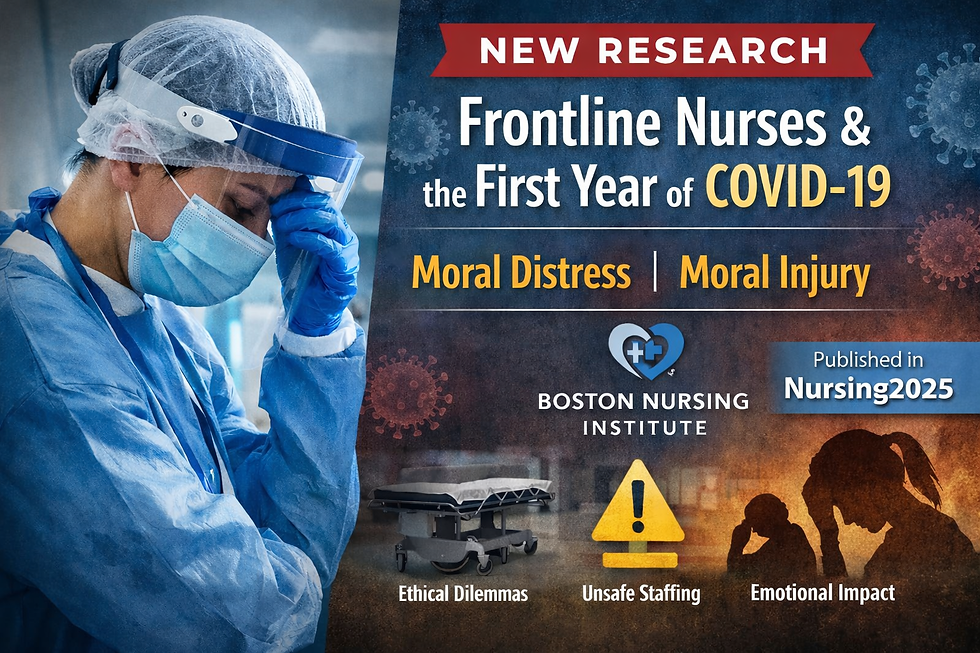
The COVID-19 pandemic placed frontline nurses at the center of an unprecedented healthcare crisis. While clinical skills were tested, many healthcare professionals faced deep moral and ethical challenges affecting their well-being and professional identity. A recent national survey study published in Nursing2025 . Authors conducted the study through the BNI and research sheds light on the moral distress and moral injury nurses experienced during this time. This research reveals how registered nurses struggled with ethical conflicts, unsafe staffing ratios, and difficult decisions beyond their control, highlighting an urgent need for better healthcare leadership.
Defining the Ethical Burden: Moral Distress vs. Moral Injury
While related, MD and MI represent different psychological impacts on the nursing workforce:
Moral Distress (MD): A state of tension where a nurse knows the "right" action but is prevented from taking it due to external constraints, such as lack of resources, time, or conflicting hospital policies.
Moral Injury (MI): A deeper psychological consequence resulting from witnessing or performing acts that violate core moral beliefs, or feeling a profound betrayal by trusted leaders.
Key Findings from the National Survey
The study used a phenomenologic design to capture the lived experiences of direct care nurses in acute care settings. Nurses were recruited through social media and professional organizations to complete an online survey. Qualitative content analysis identified several recurring themes:
1. Work-Related Challenges and Patient Care Quality
Nurses reported being haunted by suboptimal care. Key issues included:
Unsafe Patient Ratios: Overworked nurses felt they were providing "substandard care," unable to meet the needs of critically ill patients.
Witnessing Isolated Deaths: Visitor restrictions forced nurses to watch patients die alone, which many described as "violating everything they stood for".
Power Dynamics: Nurses often felt like "sacrificial lambs," assuming higher risks of virus exposure while some physicians opted for telehealth or remote consults.
2. Management-Related Issues and Institutional Betrayal
A significant factor in nurse retention is the relationship with leadership. The study found a "pervasive sense of unreliability" regarding hospital administration:
Absent Leadership: Nurses felt abandoned when managers worked from home while frontline staff faced PPE shortages.
Lack of Recognition: Instead of hazard pay or systemic support, nurses were often met with superficial gestures like "food truck vouchers" or "heroes work here" signs.
Inequitable Care: Witnessing hospital rules being "bent" for certain patients while others were denied resources created lasting ethical trauma.
3. Broad Acts of Betrayal
The sense of betrayal extended beyond the hospital walls:
The Public: Nurses felt discouraged by patients who claimed COVID-19 was a "hoax" even while receiving life-saving treatment.
The Government: Changing CDC guidelines regarding PPE (such as the suggestion to wear bandanas) left nurses feeling that their safety was not a priority.
These findings paint a vivid picture of the moral and psychological challenges nurses faced, emphasizing the complexity of their roles during the pandemic.
Real-World Examples of Moral Challenges
Consider a nurse working in an overwhelmed intensive care unit. They might have been asked to care for more patients than usual, some requiring complex interventions outside the nurse’s usual expertise. The nurse may have witnessed patients dying without family present due to visitation restrictions, causing deep emotional pain. At the same time, leadership may have been absent or unable to provide clear guidance, leaving the nurse feeling isolated and betrayed.
Another example involves ethical conflicts around resource allocation. Nurses sometimes had to follow policies that limited treatments or delayed care, even when they believed patients deserved more. These situations created internal conflicts between professional values and institutional constraints.
Why Ethical Leadership and Preparedness Matter
The study highlights the urgent need for ethical leadership that actively supports nurses facing moral challenges. Leaders must be present, transparent, and responsive to frontline concerns. This includes:
Involving nurses in decision-making processes
Ensuring safe staffing levels
Providing clear communication and guidance during crises
Offering psychological support and counseling services
Preparedness for future healthcare emergencies should include training on ethical decision-making and strategies to mitigate moral distress. Organizations must recognize the moral dimension of nursing work and create environments where nurses feel valued and supported.
Supporting Nurses Beyond the Pandemic
Addressing moral distress and injury requires ongoing attention. Healthcare systems should implement programs that:
Promote open dialogue about ethical challenges
Provide peer support groups and mental health resources
Recognize and validate nurses’ experiences
Foster a culture of respect and trust
By doing so, healthcare organizations can help nurses recover from the pandemic’s moral toll and build resilience for future challenges.
Moving Toward Rebalance and Recovery
Nurses are the backbone of healthcare, and their moral well-being deserves as much attention as their physical safety. Supporting nurses through ethical challenges strengthens the entire healthcare system and prepares it for whatever lies ahead. The findings by Scannell , Grimes, Autori, and Park . underscore that nursing ethics cannot be separated from nurse well-being.
To prevent a mass exodus from the profession, healthcare systems must prioritize:
Ethical Leadership: Including bedside nurses in systemic decision-making.
Safe Staffing: Recognizing that high ratios are not just a logistical issue, but an ethical burden.
Psychological Support: Providing targeted resources for those suffering from PTSD, compassion fatigue, and burnout.
The data is clear: the moral toll on nurses isn't just a personal struggle; it’s a systemic crisis. At the Boston Nursing Institute, we believe the path to recovery starts with listening to those at the bedside. How has your organization addressed the 'moral dimension' of your work? Share your thoughts below or message us to learn more about our ongoing research. www.Bninursing@gmail.com
Reference to article:
Scannell, M., Grimes, D., Autori, P., & Park, E. (2025). Perceived moral distress and moral injury experienced by nurses during the COVID-19 pandemic: A content analysis of a national survey. Nursing2025, 55(12), 52-61.
Research Gate Link: Click here



Comments